Hey there! If you’ve ever stopped by a hardware store, browsed home lighting deals online, or been tasked with outfitting tiny fixtures like appliance indicator lights, nightlights, or compact under-cabinet LED modules, you’ve probably run across E10 bulbs. As someone who’s been supplying these little workhorses for over a decade now, one question pops up more than any other: how do E10 bulbs hold up when they’re turned on and off super fast? I get it—most folks don’t think about how their light choices work with their habits until something breaks. Let me break this down like I do for my regular clients, no stuffy engineering jargon, just straight talk. E10 Bulb

First, let’s make sure we’re all on the same page with what an E10 bulb even is. E stands for “Edison screw” (the kind you twist in, not push-and-twist bayonet style), and the 10 is the diameter of the screw base in millimeters. They’re tiny—way smaller than the standard E26 or E27 bulbs most people use for living room lamps. That small size means they have less space for internal parts, which is exactly why their reaction to quick on-off cycles is a big deal. Whether they’re powering the start button on a coffee maker, the status light on a old gaming console, or a tiny nightlight in a kid’s closet, if that bulb flickers on and off dozens, even hundreds of times a day, it’s going to behave differently than a bulb that’s left on all week.
Let’s start with the old-school incandescent E10 bulbs, because that’s what most folks grew up with, and it’s still what a lot of budget appliance manufacturers use. An incandescent bulb works by heating a tiny tungsten filament until it glows. That filament is super thin, right? When you flip the switch, electricity zips through it fast, heating it up to thousands of degrees in milliseconds. But here’s the thing: every time you turn it off, that filament cools down quickly. Rapid heating and cooling is a killer for thin metal—think about how a glass cup cracks if you pour hot water into it too fast. For incandescent E10s, frequent on-off cycles mean the filament expands and contracts over and over, until it gets a tiny weak spot. Eventually, that spot breaks, and the bulb dies. How fast does that happen? For a standard incandescent E10, if you cycle it on and off once every minute, that’s about 60 cycles an hour, 1,440 a day. Most of these will burn out in a couple weeks, maybe a month, instead of the 1,000+ hours they’re rated for when left on. I’ve had appliance repair techs come to me saying they’re replacing 15 incandescent E10s a week for a local bakery’s oven controls because the bakers flip the oven lights on and off every time they check a batch of pastries. Those poor bulbs don’t stand a chance.
Now, a lot of people have switched to LED E10 bulbs lately—they’re way more energy efficient, last longer, and run cooler. But wait, do they handle rapid on-off cycles any better? It’s not that simple. LEDs don’t have a filament—they work by moving electrons through a semiconductor to make light. That means no heating a thin metal wire, so the thermal shock from quick cycles is way less. But they do have other parts that can take a hit: the driver. The driver is the little circuit board inside the bulb that converts the household AC power to the low-voltage DC power LEDs need. Every time you flip the switch, the driver has to power up from scratch. That repeated power surge, especially if the driver is a cheap one, can wear out its components over time—capacitors, resistors, diodes. If the driver dies, the bulb dies, too. The good news is, most quality LED E10s (the kind we supply) are built with drivers designed for frequent switching. We test every batch of our LED E10s with 10,000 on-off cycles at full power, and they still work just fine. But if someone buys a super cheap no-name LED E10 from a random online marketplace, its driver might only be rated for a few hundred cycles, so it’ll die fast. I’ve seen that too—small business owners come to me frustrated because they bought a bulk pack of cheap LED E10s for their store’s sign lights, and half of them burned out in a month because people kept flipping the sign’s on-off switch to save energy. The cheap drivers couldn’t handle it.
Wait, there’s also halogen E10 bulbs, the middle ground between incandescent and LED. Halogens are similar to incandescents, but they have a tiny bit of halogen gas inside the glass bulb that redeposits evaporated tungsten back onto the filament, so the filament lasts longer. That said, they still have a filament, so rapid on-off cycles are still hard on them. A halogen E10 might last twice as long as an incandescent in quick cycle conditions, but it’s still not nearly as durable as a good LED E10. I tell folks if their application needs frequent on-off, halogens are a short-term fix, not a long-term solution.
Now, why does this matter for you, especially if you’re someone who uses E10 bulbs on the regular? Let’s talk about common scenarios. If you’re a product manufacturer building appliances, small electronics, or lighting fixtures that will have the end user turning the bulb on and off a lot, choosing the wrong bulb can mean higher warranty costs, more callbacks, and frustrated customers. I had a client who made portable space heaters a few years back—they were using cheap incandescent E10s for the power indicator light, and they were getting 20+ warranty claims a month because the lights burned out within two months of purchase. They switched to our durable LED E10s, and the warranty calls dropped to almost zero. That’s a big win for them, and for us, because we’re supplying them with a product that solves a real problem. On the flip side, if you’re a homeowner replacing a nightlight or a desk lamp that only gets turned on once a day, rapid cycles aren’t a big deal—you might even save a little money with a cheap incandescent. But if your bathroom vanity has a small E10 bulb that you turn on and off every time you use the bathroom, or a workshop light that gets cycled dozens of times a day, you’ll want a bulb that can keep up.
I should also clear up a common myth here: a lot of people think that turning a bulb on and off uses more energy than leaving it on, so they leave it on to save money. For most bulbs, that’s not true. For incandescent and halogen E10s, the energy used to start the bulb is negligible compared to the energy it uses when it’s on. And if you’re only going to leave the bulb off for 5 minutes or less, leaving it on wastes more energy than turning it off and on. But that’s a side note—what we care about here is the lifespan. If your bulb is burning out fast, the energy you might save by turning it off is erased by the cost of buying new bulbs all the time. That’s why choosing a durable E10 bulb in the first place is way more cost-effective in the long run.
So, let’s wrap this up. What’s the takeaway when it comes to E10 bulbs and rapid on-off cycles? Incandescent E10s are the worst here—their filaments break fast with frequent cycling. Halogens are a little better, but still struggle. Quality LED E10 bulbs are the clear choice for any application where the bulb gets turned on and off a lot. They handle the power surges and temperature changes way better, last way longer, and even use less energy than the other two types. That’s why all our E10 bulb inventory focuses on high-performance LEDs—we’ve tested them in all kinds of cycling conditions, from bakery oven lights to arcade game buttons, and they hold up way better than the competition.
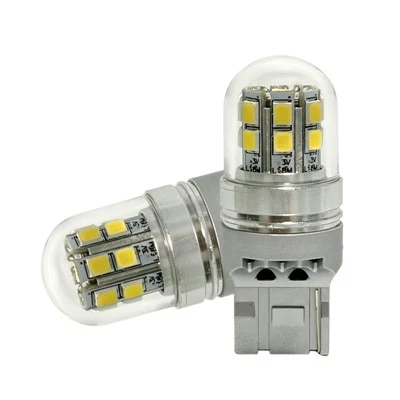
If you’re reading this and you’re someone who’s dealing with E10 bulb failures from too many on-off cycles—whether you’re a manufacturer looking to cut down on warranty costs, a retailer restocking lighting supplies, or a homeowner who’s tired of replacing nightlights every month—hit us up. We can walk you through the right E10 bulb for your needs, share test data on our cycling performance, and help you find a solution that lasts. No pressure, no sales pitch nonsense—just straight talk about bulbs that work when you need them.
T10 Bulb References
- Energy Star. (2022). LED Bulb Lifespan and Durability for Frequent Switching. U.S. Environmental Protection Agency.
- International Electrotechnical Commission. (2019). Performance Requirements for Miniature Edison Screw Bulbs. IEC Standard 60064.
- Lighting Research Center. (2021. Impact of Rapid On-Off Cycles on Solid-State Lighting Lifespan. Rensselaer Polytechnic Institute.
BULBPLAN Co., Ltd.
As one of the most professional e10 bulb manufacturers and suppliers in China, our products have good reputation in the market. Please feel free to wholesale cheap e10 bulb for sale here and get pricelist from our factory. Quality products and reasonable price are available.
Address: No. 86 Zhongli Road, Nancheng Street, Dongguan City, Guangdong Province
E-mail: Alex@bulbplan.com
WebSite: https://www.nicebulbs.com/
