If you’ve ever stood next to an industrial pipeline network—whether at a refinery, a chemical plant, a water treatment facility, or even a food and beverage processing plant—chances are you’ve glanced at a control valve and thought, “That’s just a metal plug in a pipe, right?” Nope. Let me pull back the curtain here, because as someone who’s been selling and troubleshooting these things for over a decade (I’ve got the scarred knuckles and a collection of 10+ year-old client horror stories to prove it), control valves are the unsung heroes of every pipeline system. They don’t make flashy moves, they don’t get featured in industry magazines’ annual “Top Tech” lists, but if one fails mid-shift, you could be looking at downtime that costs thousands of dollars an hour, spoiled product, or even a safety shutdown. Let’s break down what these things actually do, because it’s way more complex than just “turn flow on or off.” Control Valve
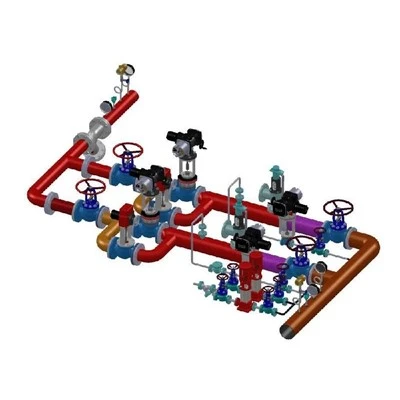
First, let’s get one basic fact straight: control valves aren’t the same as the ball valves or gate valves you’d use to shut off a sink line at home. Home valves are pretty binary—open or closed, maybe a little half-open if you’re in a pinch and don’t want to get a wrench. Industrial control valves are designed to modulate flow, pressure, temperature, or fluid level dynamically, in real time, as part of a larger automated system. That’s their core function, but let’s unpack why that matters so much.
Let’s start with flow regulation, the big one everyone talks about. Imagine a refinery moving crude oil through a pipeline to a distillation column. The column can only process a set amount of crude every hour—too fast, and the column gets flooded, leading to inefficient separation, wasted energy, and maybe even damaged equipment. Too slow, and you’re leaving product sitting in the pipeline, tying up capital and slowing down the whole production line. A control valve sits right there in the line, constantly adjusting its opening (or “stroke,” as we call it) to keep flow at exactly the setpoint the engineers programmed. How does it do that? It works with a sensor and a controller. The sensor monitors flow rate in real time, sends that data to the controller, which compares it to the desired rate, and tells the valve’s actuator (the part that moves the valve plug or disc) to open a little more if flow is too low, or close a little if it’s too high. No human has to stand there twiddling a knob 24/7—though I will say, I’ve been on calls with plants where the old timers would manually tweak the valve just because “it feels right,” and half the time they were cutting efficiency by 10%. Oops.
Next up: pressure control. Pressure is the silent killer of pipelines, honestly. If a line’s pressure gets too high, you could get a rupture, a leak, or even a full blowout—we had a client a few years back in a water treatment plant where a bad valve led to a pressure spike that popped a 6-inch line, flooding a basement and ruining a year’s worth of equipment calibrations. Control valves keep pressure in check by adjusting flow to or from a section of the line. For example, if you’re moving natural gas through a long-distance pipeline, the pressure drops as you move further from the compressor stations. A control valve at each pressure reduction station will throttle to boost pressure just enough to keep it within the safe operating range for that segment. Or take a boiler feed water line—too much pressure there, and you’ll damage the boiler; too little, and you starve the boiler, leading to shutdown. The control valve on that line does all the heavy lifting automatically, no sleep, no breaks.
Wait, there’s also temperature control, which ties into both flow and pressure. Think of a heat exchanger in a chemical plant—you’re cooling a hot chemical stream by running cold water through a jacket around it. The rate at which cold water flows through that jacket directly affects how fast the hot chemical cools to the desired temperature. A control valve on the cold water line modulates its flow, so if the hot stream starts running a little too hot, the valve opens wider to let more cold water in; if it’s getting too cold, it closes to slow that flow. It’s like a thermostat, but for industrial fluids that are way more aggressive than the air in your house. And let me tell you, when you’re dealing with fluids that are corrosive, viscous, or at high temperatures (we’ve handled lines with fluid at 800°F before), a regular valve just can’t keep up.
But here’s another function that people sleep on: level control. If you have a storage tank or a process vessel that holds a fluid, you can’t just let it fill up or drain out willy-nilly. A control valve on the inlet or outlet line will adjust to keep the level consistent. For example, in a beer brewing plant (we work with a few craft breweries now, which is way more fun than refineries sometimes), the mash tun holds a set volume of grain and water. A control valve on the water inlet keeps adding water just fast enough to maintain the correct level, so the mash doesn’t get too thin or too thick, which would mess up the beer’s flavor. No one wants watery beer, trust me.
Now, I need to be real with you here—control valves aren’t just fancy flow regulators. They also act as a safety device, which is non-negotiable in any industrial setting. Most of them have a “fail position” built in, right? Fail-open, fail-closed, or fail-in-place, depending on the application. Let’s say there’s a power outage at a plant—if the control valve is set to fail-closed, it will shut off the line automatically, preventing overpressure or a dangerous fluid spill. If you’re handling a flammable gas, that’s a huge deal. We had a client in the petrochemical industry a few years back where a power glitch hit, and their control valve on a propane line went to fail-closed, stopping a leak that would have been a total disaster. That’s not just a function—that’s a lifesaver.
Wait, let’s talk about how this all plays out in real life, because I don’t want this to be just a bunch of jargon. Let’s walk through a typical day at a municipal wastewater treatment plant. First, wastewater comes in from the city’s sewer lines, goes through a preliminary screening step. The flow here is variable—some days it’s heavy after a rainstorm, some days it’s light overnight. A control valve on the incoming main line adjusts to keep the flow into the treatment lagoon at a safe rate, so the lagoon doesn’t overflow. Then, as the wastewater moves through the aeration tanks, the valve on the air supply line modulates how much oxygen gets pumped in, because too much oxygen wastes energy, too little kills the bacteria that break down the waste. Later, when the treated water is ready to discharge into a river, another control valve adjusts the flow and pressure to make sure the discharge meets EPA standards—no excess solids, no too much pressure that erodes the riverbank. Every single one of those steps relies on a control valve working properly.
You might be wondering, “Wait, so why does the brand matter? Couldn’t I just get a cheap valve off the internet?” Let me tell you, we’ve seen that. A few years back, a small food processing plant bought a cheap no-name control valve for their syrup line. It lasted 6 weeks before it started leaking, because it wasn’t rated for the high viscosity of the syrup, and the actuator was too weak to modulate consistently. By the time they called us in, their syrup tank had overflowed, ruining $20k worth of product, and the line was down for 3 days while we replaced it. A good control valve isn’t just a piece of metal—it’s engineered for the specific fluid, pressure, temperature, and flow rate of your pipeline. That’s why we don’t sell one-size-fits-all valves. We ask questions: What fluid are you moving? Is it corrosive, viscous, abrasive? What’s the pressure and temperature range? What’s the setpoint you need to hit? That’s how we spec the right valve, not just sell the cheapest one.
Let’s also bust a myth here: control valves don’t just work with automated systems. Sure, most modern ones are hooked up to PLCs (programmable logic controllers) and run without manual input, but we also have a lot of clients who use manual control valves as part of a hybrid system, especially for smaller lines or processes that don’t need full automation. Those still do the same basic function—regulate flow, pressure, level—but they’re adjusted by a technician instead of a controller. Either way, the core job remains the same.
So, to wrap this up, what’s the real function of a control valve in a pipeline? It’s the precision regulator that keeps your process running smoothly, efficiently, and safely. It’s the part that makes sure flow doesn’t spike and waste energy, pressure doesn’t get too high and cause damage, temperature stays where it needs to, and levels stay consistent. And when something goes wrong, it’s often the first line of defense to prevent a full-scale disaster.

If you’re dealing with pipeline systems—whether you’re at a refinery, a water treatment plant, a food processing facility, a chemical plant, or any place that moves fluids from point A to point B—you know how critical these valves are. If you’re dealing with frequent downtime, inconsistent process output, or safety concerns related to your pipeline flow, pressure, or level, we can help. We don’t just sell control valves—we work with you to figure out exactly what your system needs, spec the right valve, and provide ongoing support to keep it running for years. Reach out to us to discuss your control valve needs, no pressure, just real talk about keeping your process up and running.
Desuperheater References
Control Valve Handbook, 5th Edition, ISA – The International Society of Automation
Process Control: Modeling, Design, and Simulation, B. Wayne Bequette
API Standard 6D: Pipeline Valves, American Petroleum Institute
Hangzhou Meiya Power Generating Equipments Co., Ltd
We’re professional control valve manufacturers and suppliers in China, specialized in providing the best custom service. We warmly welcome you to buy high quality control valve at competitive price from our factory.
Address: Room 1418 ,Metrology Building, Xihu District,Hangzhou
E-mail: hzmysales@chinamy-power.com
WebSite: https://www.hzmy-power.com/
