Hey there! I’m a supplier of thermal lamination film, and today I wanna chat about a super important topic: the heat resistance of thermal lamination film. Thermal Lamination Film
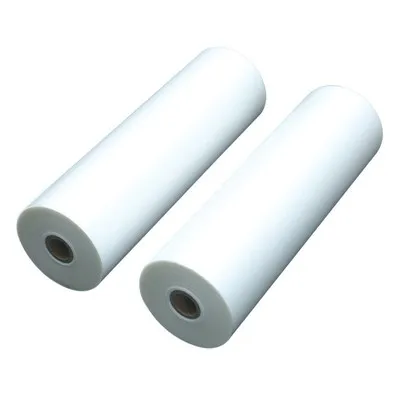
First off, let’s break down what thermal lamination film is all about. It’s a type of film that’s used to protect and enhance all sorts of printed materials, like brochures, photos, and ID cards. When you run this film through a thermal laminator, the heat activates an adhesive on the film, which then bonds to the printed item, creating a smooth, shiny, and durable finish. But here’s the thing – the heat resistance of the film plays a huge role in how well this whole process works.
So, what exactly is heat resistance? In simple terms, it’s the ability of the thermal lamination film to withstand high temperatures without melting, warping, or losing its adhesive properties. If a film doesn’t have good heat resistance, it can lead to all kinds of problems during the lamination process. For example, the film might start to bubble or wrinkle, leaving your printed material looking messy and unprofessional. Or, the adhesive might not bond properly, causing the film to peel off over time.
Now, there are a few factors that can affect the heat resistance of thermal lamination film. One of the biggest is the type of resin used in the film. Different resins have different melting points and heat tolerance levels. For instance, polyester-based films generally have a higher heat resistance compared to polypropylene-based ones. Polyester can withstand temperatures up to around 200 – 220 degrees Celsius, while polypropylene usually starts to soften at around 130 – 160 degrees Celsius.
Another factor is the thickness of the film. Thicker films tend to have better heat resistance because they have more material to absorb and distribute the heat. A thin film might be more prone to melting or warping under the same amount of heat as a thicker one. But it’s not just about slapping on the thickest film you can find. You also have to consider the type of laminator you’re using and the specific requirements of your project.
The quality of the manufacturing process also matters. A well-made thermal lamination film will have a consistent thickness and a uniform distribution of the adhesive. This helps to ensure that the film responds evenly to heat, preventing hotspots that could cause damage. On the other hand, a poorly manufactured film might have weak spots or uneven adhesive, which can lead to problems during lamination.
Let’s talk about the practical implications of heat resistance. When you’re choosing a thermal lamination film for your project, you need to think about the temperature settings of your laminator. Most laminators have adjustable temperature controls, but you still need to make sure the film can handle the heat. If you’re using a high-speed laminator, it might generate more heat, so you’ll need a film with a higher heat resistance.
For example, if you’re laminating large batches of documents in a commercial setting, you’ll probably want a film that can handle the continuous heat exposure without any issues. On the flip side, if you’re doing a small, home-based project, you might be able to get away with a film that has a lower heat resistance.
But it’s not just about the lamination process itself. The heat resistance of the film also affects the long-term durability of the laminated item. If the film can’t withstand normal environmental temperatures and heat fluctuations, it might start to degrade over time. This could mean that the film becomes brittle, loses its shine, or even starts to peel off the printed material.
So, how do you test the heat resistance of a thermal lamination film? Well, there are a few ways. One common method is to use a heat gun to apply a controlled amount of heat to a small sample of the film. You can then observe how the film reacts – does it start to melt, warp, or change color? Another way is to use a thermal imaging camera to measure the temperature distribution across the film during the lamination process. This can help you identify any hotspots or areas where the film might be under stress.
As a supplier, I always make sure to provide my customers with detailed information about the heat resistance of my thermal lamination films. I know that choosing the right film is crucial for the success of their projects, and I want to make sure they have all the information they need to make an informed decision.
If you’re in the market for thermal lamination film, I’d love to help you find the perfect product for your needs. Whether you’re a small business owner looking to laminate your marketing materials, a photographer wanting to protect your prints, or a school teacher laminating classroom resources, I’ve got you covered.
I offer a wide range of thermal lamination films with different heat resistance levels, thicknesses, and finishes. So, you can choose the film that’s just right for your specific project and laminator. And if you’re not sure which film is best for you, I’m always here to answer your questions and give you some advice.
Don’t hesitate to get in touch if you’re interested in learning more about our thermal lamination films or if you want to place an order. We can have a chat about your requirements, and I’ll make sure you get the best deal possible.
Thanks for reading, and I hope this blog post has given you a better understanding of the heat resistance of thermal lamination film.
Digital Thermal Laminaton Film References:
- Textile Testing Methods, ASTM International
- Film Science and Technology, Wiley-Interscience
- Handbook of Plastic Films, William Andrew Publishing
Yantai Hongqing Packing Material Co., Ltd.
Yantai Hongqing Packing Material Co., Ltd. is one of the most professional thermal lamination film manufacturers and suppliers in China, also supports customized service. Welcome to wholesale advanced thermal lamination film made in China here and get quotation from our factory. Quality products and reasonable price are available.
Address: Eastern Industrial Park, Taocun, Yantai, Shandong Province, China
E-mail: cindy@ythongguang.cn
WebSite: https://www.hqingnewmat.com/
