If you’ve ever worked in electronics assembly—whether you’re a tech, a supply chain manager, or just someone who’s stared at a tiny SMD component on a circuit board and wondered how it stayed that way—you’ve definitely interacted with cover tape. But if you’re just coming across SMD cover tape vs. other types of packaging tapes, you might be thinking, “Wait, isn’t tape just tape?” Spoiler: Nope. As a cover tape supplier that’s been deep in the packaging game for over a decade, I’ve seen way too many people mix this up—and it leads to costly mistakes, broken components, and even production line shutdowns. Let’s break down the real differences, why they matter, and why if you’re handling SMD parts, generic tape just won’t cut it. Cover Tape
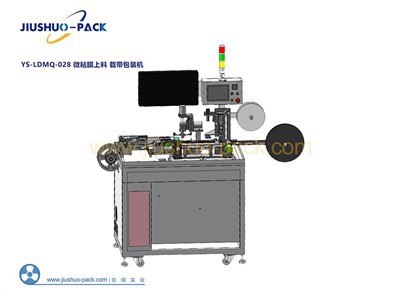
First, let’s start with what SMD cover tape even is, because that’s the foundation. SMD stands for Surface-Mount Device—those little resistors, capacitors, ICs, LEDs, and connectors that get soldered directly onto a PCB, not through holes. You can’t stack 0201 resistors (that’s 0.02” x 0.01”, smaller than a grain of rice) in a box and dump them onto a pick-and-place machine; you need them organized in a carrier tape, and covered with a protective layer so they don’t fall out, get contaminated, or get damaged during transport. That protective layer is SMD cover tape. It’s not a single product—it’s a specialized material engineered for very specific, high-stakes tasks.
Now, let’s compare it to other types of tapes you might already know. Let’s start with regular packaging tape, the stuff you use to seal a box for shipping. That’s usually pressure-sensitive adhesive (PSA) on a polypropylene (PP) backing, designed to stick to cardboard, hold up in low humidity, and resist tearing. But SMD components? They’re electrostatic discharge (ESD)-sensitive. A single static shock of just 10 volts can fry a microchip that’s rated for 10,000 volts. Regular packaging tape has no ESD protection—if you used that to cover your SMD carrier tape, you’d be sending your parts straight to the scrap bin before they even reach the production line. That’s a huge, avoidable cost. Also, regular packaging tape sticks too hard sometimes, or not hard enough: if it’s too hard, the pick-and-place machine’s nozzle can’t peel it cleanly off the carrier tape without yanking the component out; if it’s too soft, it tears during transport, and your parts spill everywhere. I’ve had a client come to me last year after using generic tape on 01005 components—they ended up with 12,000 broken parts, costing them over $15k in material and downtime. Ouch.
Next up, medical packaging tape—wait, that’s another one people mix up. Medical packaging tape is for things like sterile tools, diagnostic kits, or implantable devices, so it needs to be biocompatible, resistant to sterilization (like autoclaving or gamma radiation), and seal tightly to keep germs out. But SMD cover tape’s priorities are totally different. For one, medical tape often has a thick, rigid backing that doesn’t conform to the small, flexible pockets of carrier tape—you can’t peel it without leaving adhesive residue on the component, which would ruin the solder joint. Also, SMD cover tape has to work at super high speeds on pick-and-place machines—some lines run 100,000 components per hour. Medical tape’s peel force is usually adjusted for manual opening, not automated peeling; it can snap mid-peel, leaving a strip of tape stuck to the carrier that clogs machines and stops production. Another big one: medical tape might not have the moisture barrier SMD parts need. Humidity is the enemy of some SMD components, like integrated circuits with sensitive leads or moisture-sensitive devices (MSDs). If an IC absorbs too much moisture, when it goes through reflow soldering (the oven that melts the solder on the PCB), the moisture turns to steam and blows the IC apart. SMD cover tape has a specific moisture vapor transmission rate (MVTR) tested for MSDs, whereas medical packaging tape is optimized for sterility, not moisture control for electronic components.
Then there’s automotive packaging tape, and no, that’s not the same either. Automotive parts often use larger components, so their packaging tape might be thicker, sturdier, and designed for impact resistance during long-haul shipping. But SMDs are tiny, so automotive tape would be overkill in terms of thickness, making it hard for the pick-and-place machine to handle narrow carrier tapes (some SMD carrier tapes are only 8mm wide). Also, automotive tape might have UV resistance for exterior parts, but most SMDs are stored indoors until use, so we don’t need that—instead, we need our cover tape to be compatible with the adhesives used in SMD carrier tapes (usually polystyrene or polycarbonate) so it doesn’t delaminate during transport. Delamination is when the tape separates from the carrier, and you end up with parts stuck to the inside of the tape, or the tape pieces clogging equipment. I had an automotive component manufacturer reach out a while back because they used their regular automotive tape for their control board SMDs—they had a 3% delamination rate, which meant they had to stop the line every few hours to clear the tape. We switched them to our ESD-rated SMD cover tape, and that rate dropped to 0.02%. That’s a massive difference.
So why is SMD cover tape so different, exactly? Let’s get into the key specs that make it unique, because that’s where the science comes in. First, ESD properties: all SMD cover tape has to be static-dissipative, not just conductive or insulating. Conductive tape would discharge too quickly and damage the component; insulating tape would build up static and cause the same problem. Static-dissipative means it safely bleeds static away at a rate that’s gentle on parts, which is non-negotiable for any SMD application. Second, peel force: this is make-or-break. SMD cover tape’s peel force is calibrated specifically for automated pick-and-place machines—usually between 10 and 50 grams per inch, depending on the component size. Too low, and the tape comes off during transport; too high, and the machine’s nozzle can’t lift it off cleanly, leading to broken parts or missed placements. We test every batch of our cover tape for peel force uniformity, because even a 5-gram difference across a roll can cause issues at high-speed lines.
Third, barrier properties: as I mentioned before, ESD-sensitive ICs and MSDs need a barrier against moisture, dust, and other contaminants. SMD cover tape has a specific micro-perforation or metallized layer (like aluminum) that controls MVTR. For example, our standard cover tape for MSDs has an MVTR of less than 0.5 g/m²/day, which meets IPC standards (that’s the Association Connecting Electronics Industries, the main body setting standards for electronic packaging). Other tapes don’t come close to that—generic packaging tape might have an MVTR of 50 g/m²/day, which is way too high, leading to moisture damage. Dust is another big one; SMD components are so small that even a single dust particle can cause a short circuit. SMD cover tape is engineered to seal tightly against the carrier tape’s edges, so no dust gets in, whereas other tapes often have gaps around the edges when sealed, letting contaminants seep in.
Fourth, compatibility with reflow and soldering: some SMD cover tapes are designed to be heat-sealable to the carrier tape, so they can’t leave residue when peeled. Wait, no—wait, actually, cover tape types split into two main categories: heat-seal and pressure-sensitive. Heat-seal is the most common for SMDs, because it creates a permanent, airtight bond. But when the machine peels it, it has to peel clean, no adhesive left on the component or carrier. Other tapes, like generic packaging tape, leave residue all the time, which would mess up solder joints. Pressure-sensitive cover tape is less common, used for some specialty applications, but it still has to be ESD-rated and have low residue, which generic tape doesn’t.
Another thing most people don’t think about: traceability. A lot of SMD cover tapes have unique barcodes or markings that let manufacturers track every batch of parts, from the supplier to the production line. That’s super important for quality control, especially in regulated industries like automotive or aerospace, where you need to trace every component if there’s a recall. Other packaging tapes rarely have that level of traceability built in, because it’s not part of their design.
Let’s talk about common mistakes I see, just to drive this home. Last quarter, a small PCB assembly shop came to me panicking because their pick-and-place machine was dropping 4% of their 0407 resistors. They’d used a generic polypropylene tape they bought at a local office supply store to cover their carrier tape. Why? The generic tape was cheap, and they thought it would work. The issue? The generic tape had no ESD protection, so the resistors were getting static-shocked during transport, making them brittle and easy to drop. Also, the peel force was too high for their machine, so the nozzle couldn’t grip the tape properly. We sent them a sample roll of our ESD SMD cover tape, and the drop rate went down to 0.1% in their first test run. That’s the difference between a $20 generic tape and a $50 specialized one: thousands of dollars in downtime, material costs, and customer satisfaction on the line.
Another example: a LED manufacturer that used medical packaging tape for their SMD LEDs because it was “sterile.” Their LEDs were failing at a 10% rate because when the tape peeled, it left tiny adhesive residues on the LED’s surface, which affected the light output. Also, the medical tape had a very high MVTR, so the LEDs absorbed moisture, leading to dim light after soldering. We switched them to our low-MVTR ESD cover tape, and the failure rate dropped to 0.3%. They saved over $20k in scrap and rework that month.
So why does this matter to you, if you’re someone who works with SMD components? Whether you’re a small assembly shop, a large electronics manufacturer, or even a prototype engineer testing a new design, using the wrong cover tape isn’t just a minor inconvenience—it’s a hit to your bottom line, your production speed, and your product quality. Generic tapes can cause ESD damage, moisture issues, contamination, machine downtime, and component failure. SMD cover tape is engineered from the ground up for the unique needs of surface-mount parts: ESD protection, precise peel force, moisture and contamination barriers, compatibility with automated equipment, and no residue.
At the end of the day, it’s all about the details. SMD components are smaller, more sensitive, and require far more precision than most other parts, so their packaging needs to match that. Generic packaging, medical, or automotive tapes weren’t built for that. That’s why when you’re sourcing cover tape, you can’t just go for the cheapest option—you need a supplier that knows the specs, the standards, and the unique challenges of SMD packaging.
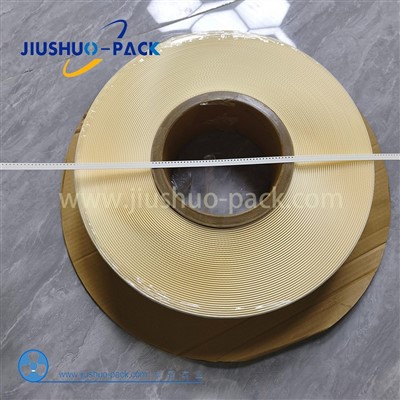
If you’re tired of dealing with broken parts, machine downtime, or high scrap rates because of bad cover tape, let’s talk. We can send you sample rolls tailored to your component size, test your current setup, and help you find a cover tape that fits exactly what you need, no compromises. Don’t let a cheap, wrong tape derail your production—reach out to us, and let’s make sure your SMD parts stay safe and sound all the way to the PCB.
Paper Carrier Tape References
IPC/JEDEC J-STD-033: Moisture Sensitivity Level (MSL) for Surface-Mount Devices
IPC-TM-650: Test Methods for Electronic Packaging Materials
Static Control Components: ESD Protection Standards for Electronic Packaging
Carrier Tape and Cover Tape Association (CCTA): Specification Guidelines for SMD Packaging MaterialsReferences
IPC/JEDEC J-STD-033: Moisture Sensitivity Level (MSL) for Surface-Mount Devices
IPC-TM-650: Test Methods for Electronic Packaging Materials
Static Control Components: ESD Protection Standards for Electronic Packaging
Carrier Tape and Cover Tape Association (CCTA): Specification Guidelines for SMD Packaging Materials
Dongguan Jiushuo Industrial Co., Ltd.
As one of the most professional cover tape manufacturers and suppliers in China, we also support customized service. Please feel free to buy high quality cover tape made in China here from our factory. Contact us for more details.
Address: 11th Floor, Building 2, Chuangfu Center, Chashan Town, Dongguan City, Guangdong Province, China
E-mail: sales06@zaidaiw.com
WebSite: https://www.carriertape-pack.com/
