If you’ve ever stood in a utility closet or checked the metal cabinet mounted just inside your garage, staring at a grid of switches and small cylindrical components, you’re looking at your distribution box. And if you’ve ever wondered why those small, often-overlooked fuses sit alongside the circuit breakers (or in some older setups, replace them), you’re not alone. As a distribution box supplier who’s spent 12 years talking to electricians, DIY homeowners, and property managers, I can tell you this question comes up constantly—and it’s one that’s not just about basic wiring, but about protecting the people, buildings, and gear that matter most. Let’s break down exactly what a fuse does in that box, why it’s still relevant even as breakers grow popular, and why the right fuse (paired with the right distribution box) isn’t just a nice-to-have—it’s non-negotiable. Distribution Box
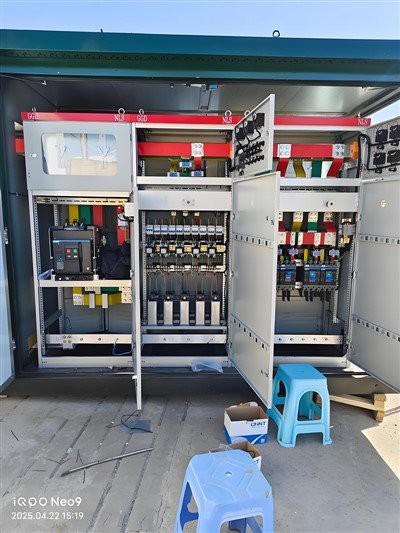
First, let’s ground this in how electricity flows through a home or building, because that’s where the purpose of the fuse becomes clear. A distribution box (sometimes called a load center, breaker box, or fuse box) is the central hub where the main power line from the utility company splits into smaller, individual circuits: one for your kitchen outlets, one for the bedroom lights, one for the AC unit, and so on. Each of these circuits is designed to carry a specific, safe amount of current—usually measured in amps. For example, a standard kitchen counter circuit is 20 amps; a clothes dryer is 30 amps; a garage outlet might be 15 amps. If something goes wrong and that circuit pulls more amps than it’s rated for, you have what’s called an overcurrent event. That overcurrent is the fuse’s whole reason for existing.
A fuse is a simple, one-use safety device: it has a thin metal wire (or filament) encased in a plastic or ceramic body, with two metal contacts on each end that slot into the distribution box’s circuit slots. That metal filament is calibrated to melt—or “blow”—at a very specific, pre-determined amperage, and it happens almost instantly when that overcurrent hits. Let’s talk about the two main types of overcurrent that trigger a fuse, because they’re the two big risks we’re all protecting against.
The first is overloading. That’s when too many devices are plugged into a single circuit, drawing more current than the circuit’s wiring (and the distribution box’s slots) can handle. For example, if you plug a space heater (which pulls 15 amps on its own), a microwave (12 amps), and a toaster (10 amps) into the same 15-amp kitchen outlet, you’re looking at 37 amps of draw—way more than the wire can carry. That extra current creates heat: hot enough to melt the plastic insulation on the wiring, which can fray, touch a nearby wire, or even start a fire. The fuse in that circuit slot blows as soon as the current exceeds 15 amps, cutting power to that circuit before the heat builds up to dangerous levels. The second type is a short circuit, which is more urgent and happens far faster. A short circuit is when a hot wire (the one carrying power) accidentally touches a neutral or ground wire—usually because of a frayed wire, damaged appliance, or water getting into an outlet. That creates a direct path for electricity to flow, with almost no resistance, so the current spikes to hundreds of amps in a fraction of a second. A circuit breaker might trip in a few milliseconds, but a fast-acting fuse blows even faster—sometimes in less than a millisecond—stopping that surge before it can spark a fire or damage appliances.
Now, you might be thinking: “If circuit breakers do the same thing (blow or trip when current is too high), why are fuses still a thing? I haven’t installed a fuse in years.” That’s a fair question, and the answer ties directly to why distribution box suppliers like me still offer both, and why fuses remain critical in specific scenarios. First, fuses are simpler and more reliable in some low-voltage, high-demand setups—like solar panel distribution boxes, RVs, industrial equipment, or older homes where the wiring isn’t designed for modern breaker technology. They also have a faster response time to extreme surges, which is why electricians often specify fuses for circuits with sensitive electronics (like server rooms or medical equipment) that can be damaged even by a brief, high-current spike. And while breakers can be reset after tripping, fuses force you to diagnose the problem before restoring power—an unexpected benefit. When a fuse blows, you can’t just flip a switch; you have to figure out why that circuit drew too much current. Did you plug in too many devices? Is there a faulty appliance? That pause keeps people from accidentally turning the power back on before fixing the issue, which is a common cause of fires from undiagnosed wiring problems.
Over the years, I’ve seen exactly what happens when a distribution box’s fuse doesn’t work the way it’s supposed to. A few years back, a contractor reached out to me panicking because he’d installed a new set of distribution boxes in a small apartment complex, using cheaper fuses that weren’t rated for the 15-amp kitchen circuits. Within six months, three units had blown fuses when a tenant ran the microwave and toaster at the same time—no fire, but weeks of down time for repairs. The real problem? Those fuses were calibrated to blow at 17 amps instead of 15, so they didn’t stop the overcurrent fast enough, and in one unit, the wiring insulation started to fray before the fuse finally tripped. That story stuck with me, because it underscores a truth I tell every customer: a fuse isn’t a generic part. It has to match the distribution box it’s installed in, and it has to be the right amperage for the circuit it’s protecting. That’s why when my team at [I will leave company name blank] works with a customer, we don’t just sell them a distribution box and fuses—we walk them through matching every component, from the main fuse for the entire building to the smaller fuses for individual bedroom circuits.
Another common misconception I hear is that fuses are outdated, and that every modern distribution box should have circuit breakers. While breakers are standard in most new residential construction in North America, fuses still dominate in many commercial and industrial settings, and for good reason. For example, in a data center, where a power surge from a faulty server can cost thousands of dollars in downtime, a fast-acting fuse is a better defense than a breaker. Fuses also have a longer lifespan in environments with extreme temperatures or vibration, like manufacturing facilities or outdoor distribution boxes, where breakers can trip unexpectedly from temperature changes. And for older homes that still have fuse boxes, upgrading to a new distribution box that works with compatible fuses (or modern breakers) is often a middle ground that’s safer than forcing old, worn fuses to do the job they weren’t designed for.
Let’s also talk about what a fuse is not, to clear up more confusion. It’s not a backup power source. It doesn’t keep your lights on when the power goes out. It’s not a way to regulate voltage—those are separate components, like surge protectors, that you install alongside fuses and breakers. Its only job is to act as a fail-safe when something goes wrong with the current in a circuit. That simplicity is its greatest strength. Unlike circuit breakers, which have moving parts that can wear out over time (a breaker might fail to trip if it’s old or damaged), a fuse has no moving parts—just a thin metal wire that melts when overloaded. That makes fuses more consistent in their performance, as long as you’re using the correct, UL-listed fuses (a key detail I always emphasize with my customers—generic fuses from a hardware store aren’t tested to the same safety standards as the ones we supply for our distribution boxes).
I’ve spent the last 12 years as a distribution box supplier, talking to thousands of customers about their electrical needs, and the fuse is one component that almost everyone overlooks until it fails. When a fuse blows, it’s an inconvenience—you have to replace it, which costs a few dollars and a minute of your time. But when a fuse fails to blow when it should, the cost is far higher: a fire, damaged appliances, or even injury. That’s why the purpose of the fuse in a distribution box isn’t just to stop a circuit from overheating. It’s to protect the people inside a building, the property they own, and the gear they rely on every single day. It’s a small, disposable part, but it’s one of the most critical safety components in your entire electrical system.
If you’re a homeowner upgrading your distribution box, a contractor working on a new build, or a property manager looking to update your commercial electrical system, the fuse is not something you should cut corners on. Choosing the right distribution box, paired with UL-listed fuses calibrated for every circuit, is one of the most important safety decisions you can make. I’ve seen the difference between a distribution box with quality, properly rated fuses and one with cheap, mismatched components—and the former gives you peace of mind, while the latter can lead to costly, dangerous problems down the line.
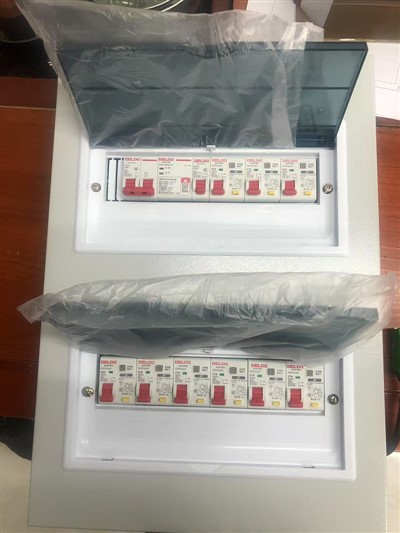
If you’re looking to source distribution boxes with compatible, safety-tested fuses, or you have questions about matching fuses to your specific circuit needs, I’m here to help. You can reach out to my team to discuss your project, get a custom quote, or ask any questions you have about electrical safety components. Don’t leave the protection of your building and the people in it to chance—partner with a supplier that understands exactly what fuses do, and how they work alongside distribution boxes to keep everyone safe.
Distribution Cabinet References
- National Electrical Code (NEC) Handbook, Article 240: Overcurrent Protection. National Fire Protection Association, 2023.
- Electrical Safety Foundation International (ESFI): “Home Electrical Safety: Fuses vs. Circuit Breakers,” 2022.
- Underwriters Laboratories (UL) Standard 248: Standard for Low-Voltage Fuses, 2021.
- Occupational Safety and Health Administration (OSHA): “Electrical Safety in the Workplace,” 2023.
- Electric Power Research Institute (EPRI): “Distribution Box Safety and Overcurrent Protection,” 2022.
Anhui Nanxian Electric Co., Ltd.
With abundant experience, we are one of the most professional distribution box manufacturers and suppliers in China. We warmly welcome you to buy advanced distribution box for sale here and get quotation from our factory. All customized products are with high quality and low price.
Address: Factory Unit 03-2, Building 21, Feidong Yinfeng Industrial Park Co., Ltd., Northeast Corner of Manquan Road and Changle Road, Hefei Circular Economy Demonstration Park, Feidong County, Hefei City, Anhui Province.
E-mail: 541580567@qq.com
WebSite: https://www.nxelepower.com/
