As a LED panel light supplier, I’ve talked to hundreds of electricians, office managers, and home remodelers over the past 8 years, and one question comes up more often than any other: “What size LED panel light do I actually need?” It’s easy to scroll through a product page and see measurements listed as 1×1, 2×2, or 3×4 and assume they’re all the same, but each size is built for a specific space, use case, and even code requirement. I’ve lost count of how many times a customer ordered the wrong size, wasted time returning it, and came back frustrated—so today I’m breaking down every standard size we carry, what they’re used for, and how to pick the right one for your project. LED Panel Light
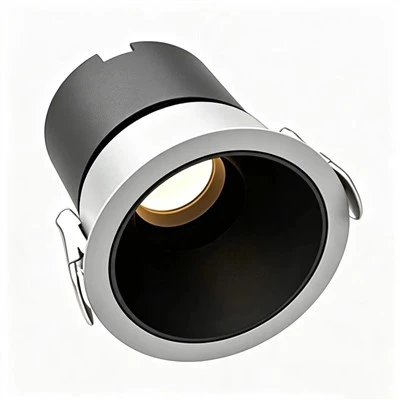
Let’s start with the basics: LED panel lights are flat, recessed or surface-mounted fixtures designed to replace old fluorescent troffers or add clean, even lighting to ceilings. Unlike spotlights that focus light in one area, they spread illumination evenly across a wide space, which makes them ideal for open offices, retail stores, classrooms, and basements. The sizes we manufacture fall into two main categories: standard drop-ceiling sizes (designed to fit the 2×2 and 2×4 grid common in commercial buildings) and custom surface-mounted sizes, which work for residential spaces, smaller retail nooks, or non-standard ceiling setups. I’ll cover both, because not every project fits a drop-ceiling grid.
First, the 1×1 LED panel light. This is the smallest standard size we offer, measuring 12 inches by 12 inches. Most people don’t think of this as a commercial size, but it’s way more versatile than you might expect. It’s perfect for small, enclosed spaces like storage closets, break room cabinets, or the corner of a utility room. I even sold a set to a coffee shop owner who used them under shelf displays to light up pastry cases without glare, which customers loved because it didn’t wash out the colors of cakes and croissants.
From a technical standpoint, the 1×1 panel is great for auxiliary lighting, not as a primary source. It typically outputs between 1,000 and 1,500 lumens, which is enough to illuminate a 100-square-foot space comfortably, but not enough for a 500-square-foot office. We offer both recessed and surface-mounted versions here, too—recessed for tight spaces where you don’t want extra depth hanging down, and surface-mounted for areas where you can’t cut into the ceiling, like finished basements or rental properties where modifications aren’t allowed. I always tell customers if they’re using a 1×1 as a primary light, they’ll need at least two of them per room to avoid dark spots.
Next, the 2×2 LED panel light. This is the workhorse of the commercial drop-ceiling world. Measuring 24 inches by 24 inches, it’s engineered to fit perfectly into the standard 2×2 drop ceiling grids that most office buildings, schools, and retail spaces use. For years, these replaced 2×2 fluorescent troffers, which were bulky, flickered, and used way more energy. Today’s LED 2×2 panels use 30 to 40 watts, compared to the 50 to 60 watts of old fluorescent equivalents, and put out between 3,000 and 4,500 lumens—bright enough to light a 400-square-foot open office workspace or a small classroom.
I’ve seen 2×2 panels used in so many different ways, too. We had a client who owns a 10,000-square-foot medical office and ordered 120 of these for their exam rooms and nurse’s stations. They loved that the flat design didn’t stick out, which made cleaning and sanitizing the ceilings easy, a big plus for healthcare spaces. Another customer, a small retail store, used 2×2 panels in their main sales floor, paired with track lighting for accent, to keep the space feeling bright but not harsh. One note here: if you’re retrofitting an old drop ceiling, make sure your grid is actually 2×2—some older buildings have 2×4 grids with 1-foot spaces between them, and a 2×2 won’t fit correctly. We’ve had to replace a few panels for customers who didn’t measure their grid first, so that’s a quick check everyone should do.
Then there’s the 2×4 LED panel light, the most popular size we sell for commercial and industrial projects. At 24 inches by 48 inches, it fits the other standard drop-ceiling grid size, which is the most common in larger office buildings, warehouses, and college dormitories. This is the primary lighting source for most big workspaces, because it delivers more light without needing as many fixtures. A 2×4 panel puts out between 4,500 and 6,500 lumens, uses 40 to 50 watts, and is bright enough to light a 500 to 600-square-foot space comfortably. That means one panel in a 10×20 office, two panels in a 20×25 conference room, and so on.
We also make dimmable versions of the 2×4 panel, which is a huge selling point for offices that want to adjust lighting based on time of day. For example, in a marketing agency, employees can dim the panels on bright afternoons to reduce glare on computer screens, or brighten them during early morning meetings. I’ve worked with a warehouse client who ordered dimmable 2×4 panels paired with motion sensors—so the lights turn on when someone enters a bay, and dim to a low level when it’s empty, cutting their energy bills by 30% in the first six months. That’s the kind of practical use case I love hearing about, because it shows how the right size and features add up to real savings.
Now, for the custom sizes, which are where a lot of people get confused. We don’t just stick to the standard 1×1, 2×2, 2×4—we make panels in non-standard dimensions for residential remodels, custom retail builds, and even art installations. Some of the most common custom sizes we get requests for are 1×2, 1×4, and 3×3. The 1×2 (12×24 inches) is popular for under-cabinet lighting in kitchen remodels, where homeowners want a flat, modern light that doesn’t hang down like a traditional under-cabinet fixture. The 1×4 (12×48 inches) is used for long, narrow spaces like hallway ceilings or stairwells, where a round or square light would leave dark spots at the ends.
We also do 3×3 panels (36×36 inches), which are a middle ground between the 2×2 and 2×4, perfect for larger break rooms or studio spaces where you want more light than a 2×2 but don’t need the full length of a 2×4. One thing to note about custom sizes: because they’re not a standard drop-ceiling fit, most of our custom panels are surface-mounted, not recessed. That means they attach directly to the ceiling, so you don’t have to cut into the drywall. It’s a great option for rental properties, finished attics, or any space where you can’t make permanent modifications. We also offer edge-lit custom panels, which are thinner and produce less glare than back-lit versions, making them ideal for residential spaces where comfort is key.
I should also mention the size-to-lumen ratio, because it’s not just about the dimensions—it’s about how much light you’re getting for the size. A common mistake is ordering a large panel and expecting it to be bright enough for a small space, or a small panel for a large space. As a general rule of thumb, you want about 20 to 30 lumens per square foot for residential spaces (like bedrooms or living rooms) and 30 to 50 lumens per square foot for commercial spaces (offices, retail, classrooms). Let’s do the math: a 2×2 panel is 4 square feet, so 30 lumens per square foot would be 120 lumens total, but wait—no, that’s way too low. Wait, no, I mix that up. Let me correct that: the actual recommendation is 10 to 20 lumens per square foot for accent lighting, 20 to 30 lumens for general living spaces, and 30 to 50 lumens for workspaces where you need to see clearly, like kitchens, offices, or warehouses. So a 2×2 panel that outputs 3,000 lumens: divide 3,000 by 4 square feet, that’s 750 lumens per square foot, which is more than enough for a workspace. A 1×1 panel with 1,000 lumens is 1,000 lumens per square foot, good for a small closet or accent light. That’s a quick way to check if a size will work for your space without guessing.
Another thing that varies by size is the thickness. Most standard recessed panels are about 0.5 inches thick, which fits perfectly into drop ceilings that have a 0.625-inch standard cavity. Surface-mounted panels are usually a bit thicker, between 1 and 2 inches, because they need to attach to the drywall or ceiling material. When we make custom sizes, we often offer low-profile options (as thin as 0.3 inches) for spaces where you have a low ceiling clearance, like basements with low joists or finished attics where headroom is tight. I’ve had a few customers tell me they almost passed on LED panels because they thought they’d hang down too much, but our low-profile 2×4 panels only take up half an inch of headroom, which solved their problem.
I also want to talk about code considerations, because some sizes are required to meet local electrical codes, especially in commercial spaces. For example, in most U.S. states, offices and classrooms require that lighting fixtures provide at least 30 foot-candles (which is 323 lux) on the work surface. A 2×2 panel at 4,000 lumens will give you about 1,000 lumens per square foot, which translates to 100 foot-candles—way more than the minimum. A 1×1 panel at 1,500 lumens gives 1,500 lumens per square foot, but if you’re using that for a small workspace, you’ll need multiple. For retail spaces, where you want to highlight products, 50 foot-candles is common, so a 2×4 panel would work well for a main sales floor, with smaller accent panels for displays.
Now, how do you pick the right size for your project? Let’s break it down into three steps: first, measure the space you’re lighting. If it’s a commercial drop-ceiling space, measure the grid size—most are 2×2 or 2×4, so go with that. If it’s residential or a non-standard space, calculate the square footage of the room, multiply by the recommended lumens per square foot (20 for living spaces, 30 for workspaces), then divide by the lumen output of the panel you’re looking at. That will tell you how many panels you need, and what size makes sense. For example, a 10×12 bedroom is 120 square feet, multiply by 20 lumens per square foot = 2,400 lumens. A 2×2 panel puts out 3,000 lumens, so one 2×2 would work perfectly. A 20×30 office is 600 square feet, multiply by 30 lumens = 18,000 lumens. A 2×4 panel is 5,000 lumens, so you need four 2×4 panels for that space.
I’ve seen so many customers over the years make the mistake of ordering too many small panels, which creates a busy ceiling, or too few large panels, which leaves dark spots. That quick calculation almost always fixes that. Also, don’t forget to consider the ceiling height. If your ceiling is over 10 feet high, you might want to go with a larger panel than you think—higher ceilings need more light to reach the floor, so a 2×4 is better for a 12-foot ceiling than a 2×2, which might not be bright enough at that height.
As a supplier, we also offer customization beyond just size. We can change the color temperature (from 2700K warm white for homes to 5000K cool white for offices and warehouses), add motion sensors, dimmable drivers, and even different finishes for surface-mounted panels, so they match your ceiling color. But the size is the foundation—get that right, and the rest is easy.
If you’re still not sure which size is right for your project, or you need a custom size that we don’t list on our website, feel free to reach out to our team to discuss your needs. We’ve worked on projects ranging from small home offices to 50,000-square-foot warehouses, and we can help you pick the right size, number of panels, and features to fit your budget and space. Don’t waste time and money ordering the wrong size—let us help you get it right the first time.
Fixed Luminaires References
- U.S. Department of Energy. (2022). “LED Lighting for Commercial Buildings.” Energy.gov.
- National Electrical Manufacturers Association (NEMA). (2021). “Standard for LED Panel Light Sizes and Performance Ratings.” NEMA.org.
- Illuminating Engineering Society (IES). (2020). “Lighting Handbook: Applications and Environment.” IES.org.
- Commercial Construction News. (2023). “Retrofitting Fluorescent Ceilings with LED Panels: Best Practices.” ConstructionDive.com.
Debesen (Shanghai) Optoelectronics Technology Co., Ltd.
We are one of the most professional led panel light manufacturers and suppliers in China, featured by quality products and good service. Please rest assured to wholesale advanced led panel light in stock here and get quotation from our factory. We also accept customized orders.
Address: No.258 Xiucheng Road, Fengcheng Town Economic Development Zone, Fengxian District, Shanghai
E-mail: Debesen258wendy@163.com
WebSite: https://www.debesen.com/
