Hey there, Bimetal Side Plates
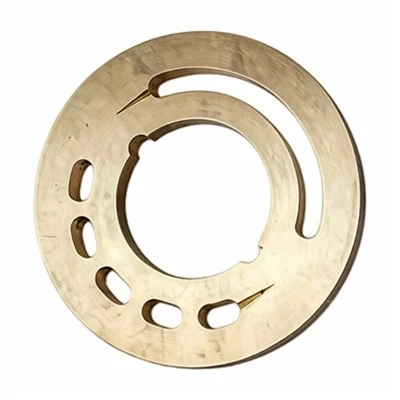
If you’re here, chances are you’re knee-deep in a project where bimetal side plates are the unsung heroes—whether that’s a construction machine that’s taking a beating on job sites, a conveyor system moving heavy parts around a factory, or even agricultural equipment bouncing through fields. I’ve been on the other side of this, too: back when I was starting out in the bimetal side plate game, I once grabbed the first plate that looked like it might fit, only to have it wear out in half the time I expected. Let’s just say that cost us a lot in downtime and frustration. Now, as someone who’s spent years working with engineers, fleet managers, and small shop owners, I’ve got a no-BS guide to help you pick the right plates, no overcomplicated jargon required.
First off, let’s break down what bimetal side plates actually do, because if you don’t know the basics, you can’t make a smart choice. These plates are made of two different metals bonded together—one is a strong, tough base metal (usually carbon steel) that handles the structural load, and the other is a hard, wear-resistant surface (like chromium or tungsten carbide) that stands up to friction and abrasion. The beauty of it is that you’re not wasting money on super expensive hard metal everywhere; you only coat the parts that need it. That’s way better than solid hard metal, which would be too brittle and costly for most applications.
The biggest mistake people make? Picking a plate based only on price. I get it—budgets are tight. But a $50 plate that dies in 3 months is way more expensive than a $100 plate that lasts 18 months. Trust me, I’ve seen that math blow up on way too many projects. So let’s start with the core question: what’s your plate going to be exposed to? That’s the foundation.
Let’s talk about the key factors you need to weigh, one by one.
- Your Application’s Wear Type
This is non-negotiable. Wear isn’t one-size-fits-all. There are two main types, and your plate needs to match the one you’re dealing with.
- Abrasive wear: This is when tiny, hard particles (like gravel, dirt, grain, or sand) scrape against the plate, grinding it away over time. If your side plates are on a front loader bucket, a conveyor that moves crushed rock, or a combine harvester, this is your main problem. For this, you want a plate with a thick hard-facing layer—think 3mm to 6mm of chromium carbide. That stuff is like a shield against those tiny particles. I’ve had farmers tell me these plates last 2x longer than plates with thinner coating in their fields.
- Impact wear: This is when big, sudden hits—like dropping a heavy part, a rock slamming into the plate, or a machine jolting—crack or chip the surface. If your plates are on a demolition tool, a rock crusher, or a hydraulic arm that takes hard knocks, abrasive-only plates will break fast. Here, you need a plate that’s tough enough to flex without cracking, even if it has a hard surface. That means a lower-hardness hard-facing layer (like 500-550 BHN) instead of the super hard 600+ BHN stuff for abrasion. Wait, BHN is Brinell Hardness Number—just think of it as a number that tells you how scratch-resistant the metal is. No need to overcomplicate it.
- If you have both: A lot of jobs have both! Like a excavator bucket that’s grinding dirt AND hitting rocks. Then you need a hybrid plate—thick enough for abrasion, but with a hard-facing that’s ductile enough (not brittle) to handle hits. Don’t try to use an abrasive plate on an impact-heavy job; you’ll be replacing it every few weeks.
-
Structural Load Requirements
The base metal is the backbone here. If your side plates are holding up a heavy load—say, a conveyor carrying 10,000 lbs of parts, or a crane’s attachment—you can’t skimp on the base. Most good plates use high-tensile carbon steel for the base, but the grade matters. For super heavy loads (like mining equipment), you might need a higher-grade steel (like A36 is common, but for really tough stuff, SAE 1045). If you pick a base metal that’s too weak, even a great hard-facing layer won’t stop the plate from bending or breaking under pressure. I once had a customer who used a cheap low-grade steel base for his conveyor plates; they bent so bad the conveyor jammed every other day. Lesson learned: ask your supplier what the base metal is. If they can’t tell you, run the other way. -
Operating Environment
Where is this plate going to live? Hot, cold, wet, corrosive? Let’s break it down.
- High heat: If you’re working in a steel mill, a glass factory, or a place where the plate gets exposed to temperatures over 200°F, regular steel might warp, and some hard-facing materials can break down. Look for plates with heat-resistant hard-facing—like nickel-based alloys instead of chromium carbide. Those hold up way better in high temps.
- Corrosive environments: If your plates are on a saltwater ferry’s conveyor, a chemical plant’s equipment, or a farm that uses fertilizer (which is super corrosive), you need more than just wear resistance. Some bimetal plates have a galvanized base, or a stainless steel layer under the hard-facing. Regular carbon steel will rust through in no time here. I once supplied plates to a seafood processing plant—they told me regular steel plates rusted through in 6 months, but the stainless-backed ones lasted 2 years. That’s the difference.
- Extreme cold: In places like Canada or northern US, where temps drop below -20°F, metal gets brittle. Pick plates that are rated for low-temperature toughness—so they don’t crack when they’re cold and get hit. Don’t assume a regular plate will work; check the supplier’s specs for cold weather performance.
-
Size and Fit (Yes, This Matters!)
It seems obvious, but I can’t tell you how many customers buy a plate that’s the right material but the wrong length or width, and then have to cut and weld it, which ruins the hard-facing. Bimetal side plates are often precision-cut, so measure your old plate exactly—including any holes, notches, or bend points. If you need a custom size, make sure your supplier can cut it to your specs. Good suppliers will even send you a template to double-check, no extra cost. Avoid plates that are too thin, either—they might be cheaper, but they’ll wear through fast and can’t handle the load. -
Cost vs. Lifespan (The Real Long Game)
Let’s circle back to the price thing. I know everyone wants the cheapest plate, but let’s do quick math. Suppose you need a plate for a loader:
- Plate A: $70, lasts 3 months, so annual cost is $280.
- Plate B: $120, lasts 9 months, annual cost is $160.
That’s almost half the cost for Plate B. Plus, downtime is a huge hidden cost. If your machine is out of service for a day, that’s lost revenue—way more than the extra $50 for a better plate. So don’t just look at the upfront price; ask the supplier how long their plates are expected to last in your specific application. A good supplier will give you a realistic estimate, not a sales pitch.
Now, a few red flags to watch out for when you’re shopping. If a supplier can’t answer these questions, they’re probably not the right fit:
- What’s the hard-facing material, and what BHN is it?
- What’s the base metal grade?
- Do you test your plates for impact, abrasion, or corrosion?
- Can you provide a lifespan estimate for my application?
- Do you offer custom sizes or cuts, if needed?
I’ve had suppliers try to sell me generic “one size fits all” plates that ended up being wrong, so always ask for specifics. Also, check if they have samples—if you can get a small piece of the plate to test against your application (like rub it with gravel, or tap it with a hammer to see if it cracks), that’s a great way to make sure it’s the right fit.
At the end of the day, choosing the right bimetal side plate is about matching the plate to what your machine actually goes through. It’s not about the fanciest or most expensive plate—it’s about the one that will stand up to your wear, your load, and your environment, so you don’t have to deal with expensive downtime or replacements every few months.
If you’re still not sure, or you want to talk through your specific application (loader, conveyor, farm equipment, whatever), I’m here to help. We’ve worked with tons of folks in all kinds of industries, and we can point you to the plates that’ll fit your needs without the guesswork. Shoot me a message to get the conversation started.
Bimetal Valve Plates References
- Groover, M. P. (2020). Fundamentals of Modern Manufacturing: Materials, Processes, and Systems. Wiley.
- ASTM International. (2022). Standard Test Method for Brinell Hardness of Metallic Materials (E10-22).
- Cutting Tool Engineering. (2021). “Wear-resistant bimetallic materials for industrial applications.”
- National Agricultural Machinery Manufacturers Association. (2020). “Abrasion and corrosion resistance in farm equipment components.”
Qingzhou Baiyun Anti-friction Products Co., Ltd.
With abundant experience, we are one of the most professional bimetal side plates manufacturers and suppliers in China. Please rest assured to wholesale customized bimetal side plates at competitive price from our factory. Welcome to contact us for quotation.
Address: Linglongshan North Road (south of the railway bridge), Economic Development Zone, Qingzhou City, Weifang City, Shandong Province
E-mail: byantifriction@gmail.com
WebSite: https://www.baiyunbimetal.com/
