When I’m chatting with my industrial clients—mostly plant managers, facility engineers, and the occasional operations lead who’s just tired of dusty equipment or stuffy warehouses—one question comes up more than any other. It’s not about nozzle specs, pump flow rates, or even how much power the unit pulls. It’s: “How high do I actually need to mount this mist generator?” Industrial Mist Generator
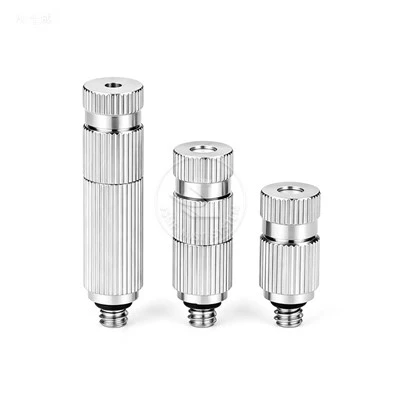
I get it. Mounting something that’s supposed to cool a 50,000 sq ft warehouse or keep metal parts from rusting in a manufacturing bay isn’t just a “stick it on a wall” task. Too low, and you’ll get wet spots on the floor, which is a slip hazard for your team. Too high, and the mist evaporates before it hits the ground—wasting water, running up your utility bill, and defeating the whole purpose of installing the unit in the first place. Let’s break this down like I would over a coffee at your facility, no stuffy jargon, just real talk from someone who’s sold these things for 12 years.
First, let’s start with the basics that most people skip: what actually makes a mist generator work, vs what makes it fail. A lot of folks think it’s just spraying water. No—industrial mist generators don’t hose you down like a backyard sprinkler. They create tiny water droplets, usually 10 to 50 microns in size, small enough to hang in the air. That’s the key. Small droplets = good for cooling, humidifying, dust suppression, or rust prevention. Big droplets = wasted water, wet floors, headaches.
Now, droplet size isn’t random. It depends on two things: the nozzle in your mist generator, and the pressure it’s running at. Most standard industrial mist generators we sell run at 800 to 1200 PSI, which is the sweet spot for those tiny droplets. If you bump it up to 1500 PSI, droplets get even smaller, but that puts more strain on the pump and wears nozzles out faster—usually not worth it for most applications. Droplets at that pressure, when they’re 20 microns, will float around. But how high you mount the unit changes everything about how long those droplets stay airborne before they either evaporate or drop.
Here’s the first rule I live by: mount height is directly tied to airflow in your space. You can’t talk about height without talking about how air moves. Let’s say you’re in a closed warehouse with no HVAC, just natural airflow from doors opening and closing. That’s super slow—usually less than 0.5 meters per second. In a busy shop with forklifts moving, conveyor belts running, or overhead fans blasting? That airflow can be 2 to 3 meters per second. That changes how your mist behaves.
Let’s take examples, because that’s the only way this makes sense. If you’re using a mist generator for dust suppression—say, in a lumber mill, or a metal stamping plant where metal shavings kick up when you grind parts. Dust suppression needs the mist to hang in the air long enough to bind with tiny dust particles and pull them down to the floor, right? For that, most of our clients mount between 2.5 meters (8 feet) and 4 meters (13 feet) high. Why? If you go lower than 2.5 meters, the droplets will drop too fast—you get wet floors, and the dust doesn’t get a chance to mix with the mist. If you go higher than 4 meters, the air at that height is often drier (hotter, more wind) so the tiny mist droplets evaporate before they can reach the dust. I had a client last year who mounted their dust suppression unit at 5 meters (16 feet) by mistake. They ran it for two days and saw zero difference in dust levels—turns out all the mist evaporated 2 meters above the floor before it could do anything. They dropped it to 3 meters, and the dust counts dropped 70% that week.
Next, evaporative cooling—this is probably the most common use case people ask about. If you’re cooling a hot warehouse in the summer, especially places where air conditioning is too expensive for a big space. For cooling, the rule is a little different, because you want the mist to evaporate to cool the air, not drop as water. Wait, but you still don’t want it to evaporate before it spreads. For evaporative cooling, we recommend mounting between 3 meters (10 feet) and 5 meters (16 feet). Why? If your space is super hot, like a 40C (104F) metal fabrication shop, the air is dry enough that mist might evaporate even faster. If you mount at 5 meters, the droplets have more time to spread horizontally as they rise, cooling a bigger area, instead of just dropping a few feet and making a small spot wet. But if you go higher than 5 meters, especially if there’s wind or overhead fans, that mist will blow out of the space entirely. I had another client in Arizona a couple years ago who was cooling a 10,000 sq ft auto body shop. They first mounted their unit at 6 meters (20 feet) because someone told them “higher is better.” Within an hour, all the mist was blowing out the loading dock, and their AC unit (the backup) had to work twice as hard. They dropped it to 4 meters, and within a week, their internal temp dropped 5C across the whole shop, with no wet floors. That’s the sweet spot.
Then there’s humidification—usually for food processing, textile mills, or storage facilities where dry air ruins products or causes static. For humidification, you want the mist to stay airborne as long as possible to raise the overall humidity, not just make a wet area. So here, we recommend mounting a little higher: between 4 meters (13 feet) and 6 meters (20 feet). Wait, why? Because if you’re humidifying a space that’s 7 meters high, like a grain storage silo or a textile weaving floor, mounting too low means the mist just clumps at the bottom, making that area too humid and leaving the top of the space too dry. I worked with a textile mill in Georgia a few years back that was having a huge problem with static causing thread breaks. They tried mounting their humidifiers at 2.5 meters, and the bottom of the floor was so humid the thread got moldy. They bumped it to 5 meters, and the static went away, the thread quality improved, and mold issues dropped to almost zero. That was a big win for them—saved $20k a month in rework costs.
Now, what about edge cases? Like if you have a space with really high ceilings—say a manufacturing plant with ceilings at 10 meters (33 feet) or more. Here, you can’t mount a single unit high enough to cover the whole space, so you need to space multiple units. We usually recommend mounting secondary units every 6 to 8 meters apart, each at 4 to 5 meters, so the mist plumes overlap at the right height. Or if you have a space with really low ceilings—like a small parts shop with ceilings only 2 meters (6.5 feet) high. Wait, can you even use mist generators there? Yes, but you have to adjust. You can’t mount a standard unit more than 2 meters high, and you might want to use a lower-pressure nozzle (600 PSI) to make slightly bigger droplets that don’t evaporate too fast. I had a customer with a 1.8 meter (6 foot) ceiling machine shop who was tired of cutting fluid residue and dust. We swapped their standard nozzle for a low-pressure one, mounted it at 1.7 meters, and it works perfectly—no wet spots, just enough mist to keep parts clean and dust down. That’s another thing: if your ceiling is under 2.5 meters, don’t use a standard high-pressure unit. It’s not made for that height.
Wait, but what about airflow direction? That’s a factor most people forget. If you’re mounting near an open door or a vent that’s blowing air out, you’ll have to mount a little higher. If you’re in a space with no airflow at all, you can mount a little lower. I always tell clients to do a quick test: take a spray bottle, fill it with water, and spray a mist of droplets into the space where you want to mount the generator. Watch how long it takes to drop, how far it spreads. If it drops in 10 seconds, that’s too short—you need to mount a little higher. If it evaporates in 5 seconds before it hits the middle of the space, that’s too high. Do that test before you drill any holes, and you’ll avoid 90% of the mistakes I see new clients make.
Another thing: safety. OSHA has guidelines, right? Let’s keep this real—OSHA says that mist systems can’t create walking surfaces that are slippery, so if you mount too low, you’re violating that. Also, if you’re spraying near electrical equipment (which a lot of industrial spaces have), mounting too low can put mist directly on wires or circuits, which is a hazard. We always tell clients to mount at least 1 meter away from any electrical panels or equipment, so that’s another factor that affects height. If you have to mount near a panel, you might have to bump the unit a little higher to keep the mist plume away from the wiring.
Wait, I should also address a myth I hear all the time: “Higher = better coverage.” No, that’s not true. Coverage depends on the nozzle angle and the unit’s output, not just height. A standard nozzle has a 30 to 60 degree spray angle. So if you mount it at 4 meters, it will cover a semicircle about 5 to 7 meters wide at the floor. If you mount it at 6 meters, that width jumps to 9 to 12 meters, but half the droplets will evaporate before they get there. So you’re not getting more coverage—you’re getting wasted water and higher costs. I’ve seen clients throw $1000s a month down the drain because they mounted units too high, not realizing the mist was just disappearing into thin air.
What about winter vs summer? If you’re using a mist generator in the winter, when the air is colder and drier, droplets evaporate slower, right? So you can mount a little lower, like 3 meters instead of 4, because the mist will hang around longer. In the summer, when it’s hot and humid, evaporation is faster, so you might need to mount a little higher, or use a unit with a larger spray angle to get more coverage. That’s another adjustment to make based on the season.
Let’s wrap this up with a quick cheat sheet, because I know people love that. For reference:
- Dust suppression: Mount at 2.5–4m (8–13ft), adjust +0.5m if airflow is high.
- Evaporative cooling: Mount at 3–5m (10–16ft), adjust -0.5m in low-temperature/dry air.
- Humidification: Mount at 4–6m (13–20ft), use secondary units if ceilings are over 7m.
- Low ceilings (<2.5m/8ft): Use low-pressure nozzles, mount at 1.5–2m (5–6.5ft).
But here’s the thing: every space is different. I can give you the cheat sheet, but your facility has its own unique airflow, ceiling height, temperature, and what you’re using the mist for. That’s why we always offer a free site assessment for any client thinking about getting a mist generator. We’ll walk your space, measure airflow, check ceiling heights, and tell you exactly where to mount each unit, no guesswork.
If you’re tired of wet floors from badly mounted mist generators, or you’re not getting the results you expected because yours is too high (or too low), hit us up to chat. We can answer all your questions about height, nozzles, pressure, whatever you need to get your system working right. You don’t have to deal with wasted water, slip hazards, or useless mist—just reach out, and we’ll make it easy.
Pipe Fittings References:
- Industrial Mist Technology Association. (2021). Installation Guidelines for High-Pressure Mist Systems.
- Occupational Safety and Health Administration (OSHA). (2020). General Industry Guidelines for Slip, Trip, and Fall Prevention.
- Manufacturing Process Cooling Association. (2022). Evaporative Cooling System Design and Installation Best Practices.
- Textile Industry Association. (2021). Humidification Requirements for High-Volume Production Spaces.
Jinsheng Mist Forest-High Pressure Mist System
Address: 109 Yonghong Road, Wenjiang District, Chengdu City, Sichuan Province, China
E-mail: 18190767523@163.com
WebSite: https://www.jswsmist.com/
